


Ukrainian ethno-style in interior design has evolved far beyond traditional museums or souvenir spaces. Today, traditional ornaments represent a powerful design trend that seamlessly integrates into modern minimalist apartments, lofts, Scandinavian interiors, and cozy countryside homes. One of the most practical and stylish ways to adorn your home with authentic symbols is by using reusable wall stencils from DFA Decor.
In this article, we will explore how to use stencil techniques to transform a standard accent wall into a piece of art, which symbols to choose for each room, and how to achieve professional-grade DIY wall decor with no prior painting experience.

Why Vyshyvanka Ornaments on Walls Are a Top Trend in Modern Interiors
Modern design values individuality, depth, and rich textural meaning. Traditional Ukrainian embroidery is more than just a decorative geometric or floral pattern; it is a sacred code carrying positive energy, warmth, and a deep connection to roots and heritage.
Incorporating embroidery motifs into wall design allows you to:
-
Create a unique feature wall: Instead of standard wallpaper, you get a textured, high-end surface that naturally draws attention.
-
Maintain style balance: Crisp geometric diamonds and lines complement modern materials exceptionally well—including concrete, wood, plaster, and matte paint.
-
Effortlessly refresh your space: Applying an ornament with a durable, reusable stencil takes minimal time while completely transforming the room's atmosphere.

Geometry and Symbolism: How to Choose the Right Pattern
Every region of Ukraine is famous for its distinct embroidery motifs. When selecting a pattern for your interior, consider the form and meaning behind each element:
1. Geometric Ornaments (Diamonds, Lines, Crosses)
A timeless classic ideal for contemporary interiors, minimalism, or modern design aesthetics. A diamond with a dot in the center traditionally symbolizes a fertile field and prosperity, while crisp lines help visually adjust room proportions:
-
Vertical bands featuring embroidered motifs visually elevate the ceiling.
-
Horizontal friezes broaden narrow hallways or entryways.
2. Floral and Botanical Motifs
Viburnum berries, oak leaves, rosettes, and flowing vines bring softness and organic fluidity to space. They look stunning in bedrooms, nurseries, or living room relaxation areas, creating an atmosphere of harmony with nature.
Design Tip: To explore a full palette of authentic motifs designed for modern home standards, visit our dedicated Vyshyvanka stencil collection, featuring geometric, floral, and border patterns suited for any surface.
DIY Wall Decorating: A Step-by-Step Guide
Applying a stencil pattern does not require artistic training. Success comes down to precision and using the right tools.
Tools and Materials You Will Need:
-
A reusable stencil made of durable, flexible plastic.
-
Painter’s tape or temporary repositionable spray adhesive.
-
A bubble level for accurate pattern alignment.
-
A dense foam roller or stippling stencil brush (short bristles).
-
Acrylic paint in your desired shade or textured decorative plaster.
-
Paper towels to blot off excess paint.

Step-by-Step Instructions:
Step 1. Surface Preparation and Layout
The wall must be dry, clean, and primed. Using a level and pencil, mark a subtle horizontal or vertical baseline. This ensures your Vyshyvanka ornament remains perfectly straight during application.
Step 2. Securing the Stencil
Fix the plastic template to the wall using painter’s tape. If working with a large panel or intricate lace-like details, apply a light coat of temporary spray adhesive to the back—it leaves no residue on the wall and ensures crisp edges.
Step 3. Paint Application (The Key Secret!)
The most common beginner mistake is overloading the brush or roller with paint.
-
Dip the roller or brush lightly into the paint.
-
Thoroughly blot it on a paper towel until the tool is nearly dry.
-
Apply the paint using light dabbing motions (for brushes) or uniform, gentle pressure (for rollers). The dry-brush technique prevents paint from bleeding under the template edges.
Step 4. Textured 3D Effect (Alternative Method)
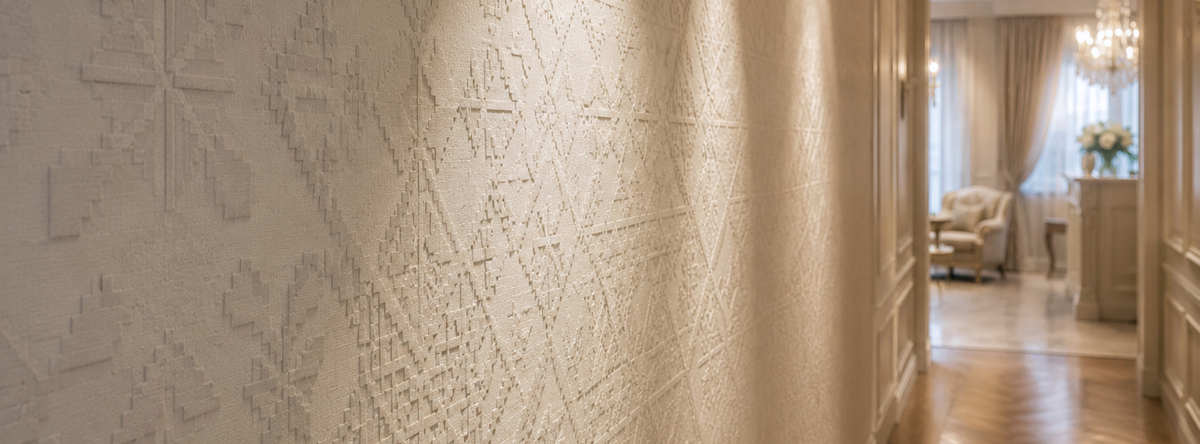
To achieve a tactile, raised embroidery effect on the wall, substitute paint with acrylic putty or 3D plaster. Apply a layer 1–2 mm thick over the stencil using a putty knife, then carefully lift the template. Once dry, the dimensional pattern can be painted or glazed.
Step 5. Repositioning the Template
Remove the stencil right after applying the paint. High-quality stencils include alignment registration marks, allowing you to easily repeat and extend the pattern across the full length or height of the wall.
Color Palette Tips for Embroidery Patterns
-
Classic Contrast (Red and Black): A iconic combination that brings energy and character to a space. It works best as an accent frieze against a light, neutral backdrop.
-
Tone-on-Tone (Subtle Elegance): Apply the pattern in a paint shade just 1–2 tones darker or lighter than the base wall color. This creates an aesthetic, fabric-like embossed effect.
-
Modern Metallic: Graphite, golden, or copper Vyshyvanka patterns against deep blue, dark green, or gray surfaces lend a refined, aesthetic touch to the room.

Create Your Unique Interior with DFA Decor
Authentic Ukrainian decor is a timeless way to make your home warm, inviting, and visually distinct. By using durable, reusable templates, you can easily execute high-end design ideas yourself without hiring expensive contractors.
Explore the official DFA Decor online shop to find a wide selection of premium interior stencils engineered for paint, plaster, and custom DIY projects. Browse the collection, select your favorite patterns, and start crafting a truly unique space today!
Share:
Botanical Print Stencils: How to Easily Create Trendy Accent Decor in Your Interior
How to Create Realistic Stone, Brick, and Wood Textures on Walls and Floors Using Silicone Stamps and Mats