


Choosing a wall stencil is about more than finding a pattern you like. The shapes, spacing, scale, and colors of a design all influence how it looks alongside your furniture, lighting, and existing decor.
Geometric, floral, and Art Deco wall stencils offer three different approaches to decorating a space. Understanding their visual characteristics will help you select a design that suits your room and feels intentional rather than overwhelming.
Quick Answer: Which Wall Stencil Style Should You Choose?
Choose geometric wall stencils for clean lines, structured patterns, and a modern or minimalist look. They work especially well when you want a repeating design that complements simple furniture.
Choose floral wall stencils for softer, nature-inspired decoration. Botanical branches, flowers, and flowing leaves can add visual warmth to bedrooms, living rooms, and cottage-inspired interiors.
Choose Art Deco wall stencils for bold symmetry, elegant curves, and architectural details. Fan shapes, arches, and stepped geometric motifs can create a distinctive accent wall.
The best choice depends on three things: your existing interior style, the visual impact you want, and how much of the wall you plan to decorate.
| Feature | Geometric | Floral | Art Deco |
|---|---|---|---|
| Main design elements | Lines, circles, grids, polygons | Flowers, leaves, vines, branches | Fans, arches, stepped forms, symmetry |
| Overall appearance | Structured and contemporary | Organic and expressive | Decorative and architectural |
| Common interior pairings | Modern, minimalist, Scandinavian | Cottage, traditional, bohemian | Art Deco, vintage-inspired, contemporary |
| Pattern arrangement | Regular repeats or graphic accents | Scattered motifs or flowing repeats | Symmetrical repeats or statement motifs |
| Color approach | Tonal neutrals or strong contrast | Soft neutrals or natural colors | Contrasting tones or metallic-inspired accents |
| Good starting project | Living room feature wall | Bedroom accent wall | Entryway statement wall |
These are design suggestions, not fixed rules. A geometric stencil can feel traditional, while a floral pattern can look contemporary when paired with an unexpected color palette.
Geometric Wall Stencils: Clean Lines and Modern Structure
Geometric wall stencils use recognizable shapes such as squares, diamonds, circles, triangles, and intersecting lines. Their main characteristic is an organized visual rhythm.
Unlike a single decorative illustration, a repeating geometric design can become part of the room's overall architecture. It introduces pattern while preserving a sense of order.
When Geometric Patterns Work Best
Consider geometric wall stencils if your room features:
-
Simple, contemporary furniture with clean silhouettes.
-
Neutral walls that need additional visual interest.
-
Modern or mid-century-inspired decor.
-
Straight architectural lines and uncluttered surfaces.
-
A preference for symmetrical or repeating designs.
For a subtle result, try a geometric stencil in a color only slightly darker or lighter than the base wall.
For a stronger statement, use a contrasting shade on one accent wall while keeping surrounding walls simple.
A large geometric motif can also work as a single decorative panel rather than covering the entire surface.
Geometric Stencil Design Example
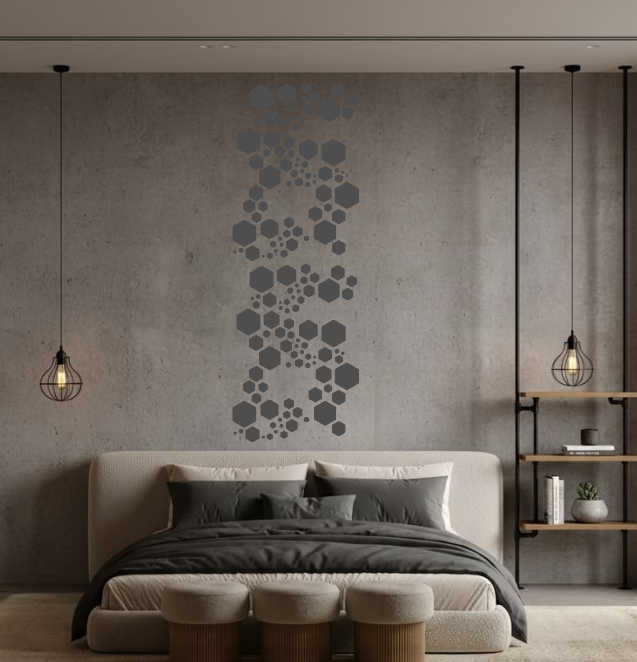
Imagine a living room with warm white walls, light oak furniture, and a neutral sofa. A repeating geometric pattern in muted taupe could introduce structure without competing with the furniture.
For a more graphic effect, the same type of pattern could be painted in charcoal against an off-white background.
DFAdecor's Geometric Wall Stencil for Modern Paint and Plaster Decor provides an example of a reusable geometric design offered in different sizes for decorative projects.

Geometric patterns introduce rhythm and structure without requiring a dramatic color change.
Floral Wall Stencils: Natural Shapes and Softer Decoration
Floral wall stencils take inspiration from plants and botanical forms. Designs may include delicate flowers, large leaves, trailing vines, or more structured ornamental arrangements.
Their appearance depends heavily on the artwork. A small botanical branch can feel light and understated, while a large floral repeat can become the dominant feature of a room.
Where Floral Stencils Look Most Natural
Floral patterns are worth considering for:
-
Bedrooms that need a softer decorative element.
-
Living rooms with natural materials and warm colors.
-
Cottage-style or vintage-inspired interiors.
-
Reading corners and cozy seating areas.
-
Spaces with wooden furniture, linen textiles, or botanical accents.
Floral designs can also suit modern interiors. A simplified leaf motif painted in one color often looks more contemporary than a highly detailed, multicolored arrangement.
Choosing Between Small and Large Floral Motifs
Small floral motifs work well when you want delicate details or a repeating background pattern.
Larger flowers and botanical branches are better suited to areas where the design can be appreciated as a focal point, such as behind a bed or above a console table.
Consider the amount of empty space between the shapes. An open botanical pattern often feels lighter than a densely packed floral repeat, even when both use the same colors.
Floral Stencil Design Example
In a bedroom with cream walls, pale wood furniture, and linen bedding, a botanical stencil in muted sage green could complement the natural materials.
For a more dramatic bedroom, oversized floral silhouettes in a deep, earthy shade could frame the headboard.
DFAdecor's Nature and Flowers Wall Stencil is one example of a nature-inspired design available for decorative painting projects.

Botanical stencil patterns can soften a bedroom while complementing natural materials and neutral furnishings.
Art Deco Wall Stencils: Symmetry, Curves, and Statement Design
Art Deco is a decorative design style associated with the 1920s and 1930s. Its visual language includes geometric symmetry, stylized natural forms, repeating arches, fan shapes, and stepped details.
Although Art Deco and geometric patterns overlap, their overall character is different.
A minimalist geometric design often emphasizes simplicity. An Art Deco-inspired pattern typically uses geometry to create a more ornamental, architectural composition.
What Makes a Wall Stencil Look Art Deco?
Look for combinations of:
-
Repeating fan or sunburst shapes.
-
Symmetrical arches and curved lines.
-
Stepped geometric arrangements.
-
Strong vertical or horizontal rhythm.
-
Stylized decorative forms.
-
Balanced, repeating ornamental details.
Not every geometric stencil is Art Deco. A simple checkerboard, for example, is geometric but does not automatically reflect the decorative characteristics of the Art Deco style.
Where to Use Art Deco-Inspired Patterns
Art Deco designs are especially effective when you want a wall to feel like a deliberate architectural feature.
Consider using them in an entryway, dining room, home office, or behind a sofa.
An Art Deco-inspired stencil can also work in a modern room. Pairing an ornamental pattern with simple furniture helps balance the decorative detail.
Choosing Colors for an Art Deco Look
Black and warm white create a strong graphic contrast. Deep green and cream offer a richer, softer combination.
Gold-toned paint can introduce a metallic-inspired accent, but the finish depends on the paint itself. A stencil determines the shape of the pattern, not whether the finished surface will be metallic or glossy.
If you prefer understated decor, try a symmetrical Art Deco motif in two closely related neutral shades.
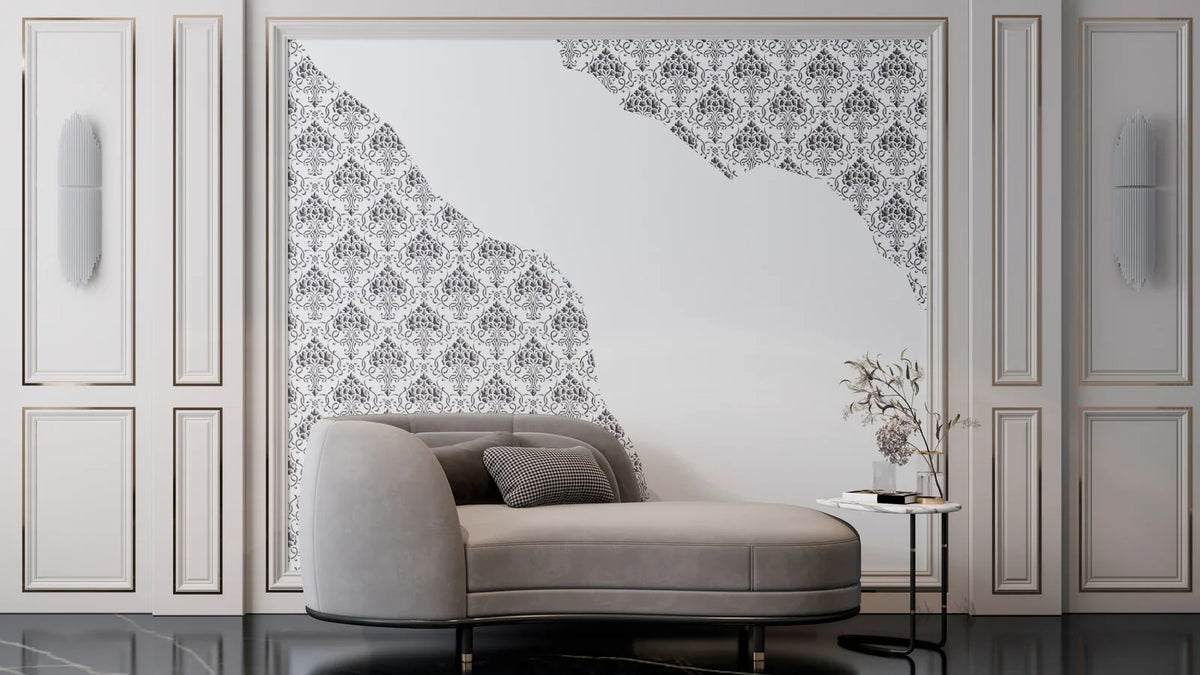
For inspiration, explore DFAdecor's wall stencil collection and look for geometric and ornamental designs with arches, curves, or symmetrical arrangements.

Symmetrical arches and decorative geometry give an accent wall a distinctive Art Deco-inspired character.
How to Match a Wall Stencil to Your Existing Room
A stencil should work with the room you already have, not just with an inspirational photograph.
Before choosing a pattern, consider the furniture, wall dimensions, architectural features, and other decorative elements.
1. Look at the Shapes Already in the Room
Start with the dominant lines and forms.
A room with rectangular furniture, straight shelving, and minimal accessories may benefit from a geometric pattern that reinforces those shapes.
A room filled with rounded furniture, natural wood, and soft textiles may suit an organic botanical design.
For interiors with curved mirrors, decorative lighting, and symmetrical furniture arrangements, an Art Deco-inspired motif can create a visual connection.
You can also use contrast intentionally. A curved floral design may soften a room dominated by straight lines.
2. Consider How Much Pattern the Room Can Handle
A room with patterned rugs, colorful upholstery, or detailed curtains already contains considerable visual information.
Adding a dense wall pattern may make the space feel crowded.
In that situation, consider a stencil with more open space between the design elements or use it only on a small area.
If your furniture and textiles are mostly solid colors, you have more freedom to introduce a larger or more detailed wall pattern.
3. Decide Whether the Wall Should Blend In or Stand Out
For a subtle background effect, choose a low-contrast color combination and a relatively open pattern.
For a statement wall, consider larger motifs, stronger color contrast, or a more decorative composition.
The stencil style alone does not determine how bold the result will be.
A large floral pattern in black and white can look more dramatic than a small Art Deco design in pale beige.
How to Choose the Right Stencil Size and Pattern Scale
Pattern scale is just as important as style.
A design that looks balanced in a product photograph may appear very different when repeated across an entire wall.
Small vs. Large Stencil Patterns
Small-scale patterns create more frequent repetition. They can add fine detail to a wall, but intricate designs may also require careful alignment and more individual applications.
Large-scale patterns create fewer, more prominent motifs. They can work well on spacious accent walls or as a single focal feature.
However, a larger stencil does not automatically mean a larger-looking pattern. The amount of open space and the size of the individual design elements also matter.
Measure Before Choosing
Before selecting a stencil size:
-
Measure the width and height of the area you want to decorate.
-
Identify interruptions such as windows, doors, outlets, and wall corners.
-
Check the dimensions of the actual design and its repeating section.
-
Estimate how many repeats will fit across the wall.
-
Decide how the pattern should end at the edges.
-
Test the layout with paper templates or painter's tape before painting.
Pay particular attention to the difference between the overall stencil sheet size and the dimensions of the printed design.
For example, a 24-inch-wide wall section does not necessarily accommodate a 24-inch-wide motif comfortably if you need space for borders or centered placement.
If you are planning a large repeating design, the DFAdecor wall stencil collection offers patterns with different sizes and visual styles to compare.
Which Wall Stencil Works Best for Each Room?
There is no single stencil style that works best in every room. The right choice depends on how the space is used and the effect you want.
| Room | Suggested Style | Why It May Work |
|---|---|---|
| Living room | Geometric or Art Deco | Adds structure or a decorative focal point |
| Bedroom | Floral or subtle geometric | Creates a softer or more organized background |
| Dining room | Art Deco or ornamental geometric | Complements a statement wall or decorative setting |
| Home office | Geometric | Introduces visual rhythm alongside functional furniture |
| Entryway | Art Deco or large geometric | Makes a relatively small feature area distinctive |
| Reading nook | Floral | Complements a relaxed, nature-inspired setting |
| Hallway | Simple geometric or botanical | Adds interest without requiring a large decorative composition |
What About Small Rooms?
A small room does not necessarily require a small stencil pattern.
A large, open motif can look less visually busy than a tightly repeated design with many small details.
The important factors are contrast, pattern density, and placement.
For example, one oversized botanical branch on a bedroom wall may feel calmer than dozens of small flowers covering every surface.
Can You Use Different Stencil Styles in the Same Home?
Yes. Different rooms can have their own decorative identity while sharing a consistent color palette.
You might use a geometric design in a home office, a floral accent in the bedroom, and an Art Deco-inspired pattern in the entryway.
To create continuity, repeat one or two paint colors, maintain similar contrast levels, or choose patterns with compatible visual proportions.
Painted Patterns vs. Raised Decorative Stencils
Once you have selected a pattern style, consider the finish you want.
A flat painted stencil and a raised plaster design can create noticeably different effects, even when the pattern is identical.
Painted Wall Stencils
Painted stencils are suitable for creating color-based patterns on properly prepared surfaces.
They allow you to work with subtle tone-on-tone designs, contrasting colors, and different decorative arrangements.
The finished result depends on the stencil, paint, surface preparation, and application technique.
Raised Plaster Stencils
Raised stencil designs use a suitable decorative compound to create a textured pattern.
This approach introduces physical depth, allowing light and shadow to emphasize the shapes.
Geometric and Art Deco-inspired designs can benefit from raised architectural details, while floral patterns can produce a more sculptural botanical effect.
However, not every stencil is intended for plaster.
DFAdecor offers certain stencil designs in separate paint and plaster versions. For example, its Geometric Wall Stencil lists different thickness options for these applications.
Always check the selected product variant and instructions before choosing your decorative material.
A Simple Checklist Before Buying a Wall Stencil
Once you have narrowed your choice to geometric, floral, or Art Deco, use this checklist to make your final decision.
-
Pattern style: Does the design complement the furniture and architectural details?
-
Visual density: Will the pattern feel balanced when repeated across the intended area?
-
Scale: Are the motif dimensions appropriate for the wall?
-
Placement: Will you decorate an entire wall, a border, or a smaller accent section?
-
Paint colors: Have you considered how the pattern looks in both daylight and artificial lighting?
-
Surface condition: Is the wall clean, stable, and suitable for the chosen finish?
-
Application method: Is the selected stencil intended for paint, plaster, or another specific material?
-
Repeat alignment: Can you plan the pattern around corners, openings, and edges?
-
Maintenance: Are the selected paint and finish appropriate for how the room is used?
If you are unsure between two styles, make a small sample of each using your intended colors.
View the samples from different distances and at different times of day. A pattern that looks attractive up close may feel too detailed when seen from across the room.
For more guidance on stencil application, DFAdecor's article on preventing paint from bleeding under a wall stencil covers an important part of achieving clean painted edges.
Final Thoughts: Choose the Pattern That Fits Your Space
Geometric, floral, and Art Deco wall stencils each offer a different way to personalize an interior.
Geometric designs emphasize structure and repetition. Floral patterns introduce natural shapes and softer movement. Art Deco-inspired motifs use symmetry and decorative geometry to create a more architectural statement.
Rather than choosing a stencil based on its style label alone, look at the actual motif, its size, the space between the shapes, and how it will interact with your room.
Start with the wall you want to decorate, decide how prominent the pattern should be, and choose colors that complement what is already there.
A carefully selected stencil can turn a plain surface into a decorative feature that feels like a natural part of your home.
Share:
How to Stop Paint Bleeding Under a Wall Stencil